Decolonising colonial institutions
Written by Leah Subijano | Published January 2026
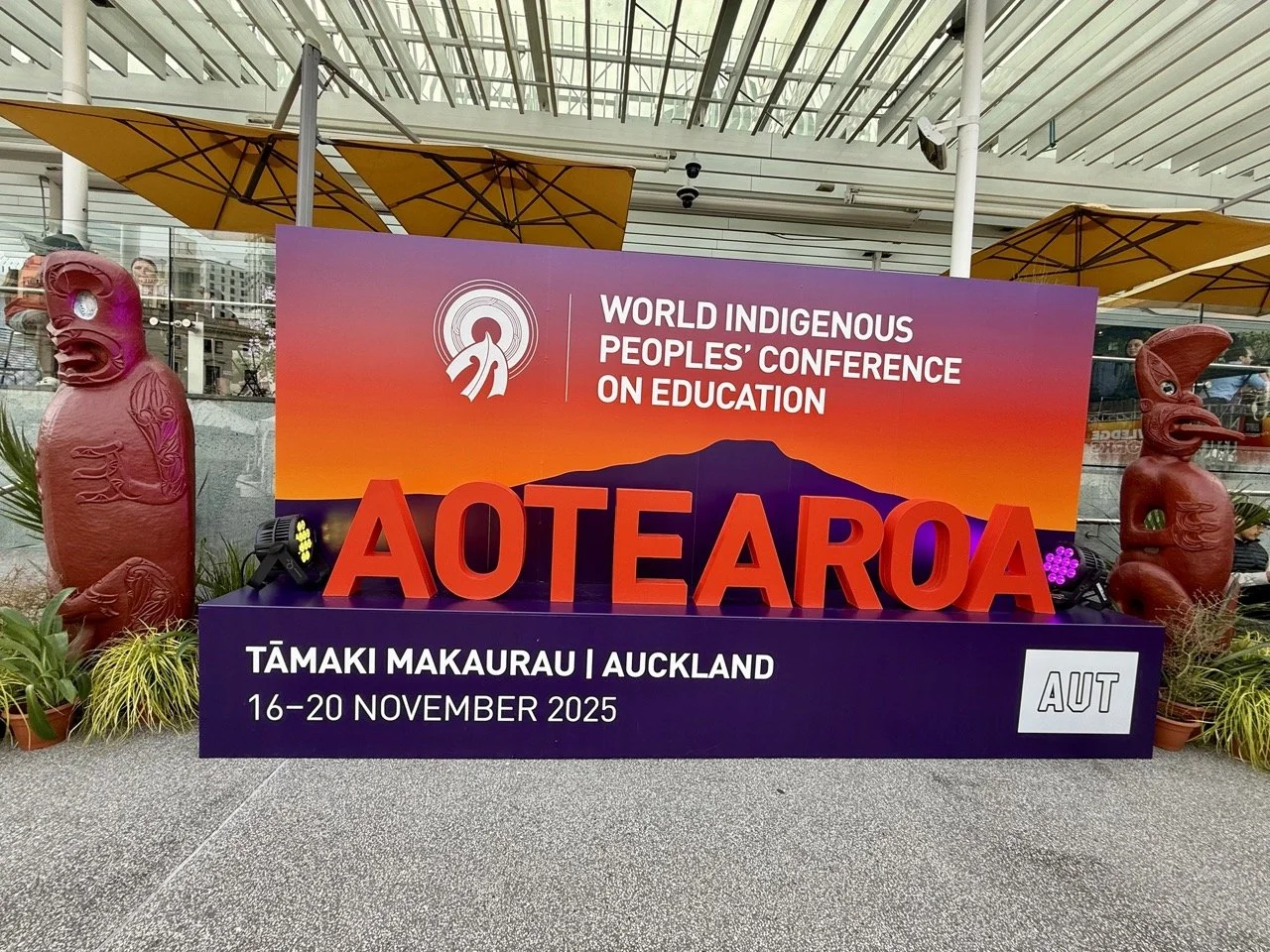
I had the privilege of attending the World Indigenous Peoples’ Conference on Education (WIPCE) 2025 in Aotearoa as part of professional development supported by my workplace. I’m grateful to the UTS Centre for Social Justice and Inclusion for recognising the value of this opportunity for me to listen, learn, and bring those insights back to inform our practice.
Going into the conference, I had one critical question: Can we truly decolonise the institutional systems built to enforce colonial power, or are we just reshaping the same oppressive structures?
At WIPCE, speakers confronted this question head-on. The kōrero was powerful with presenters speaking truth to power with courage and clarity. Their words ignited the disruptor in me by challenging not only systems but also the ways we show up within them.
Decolonising higher education
Decolonisation is the process of dismantling colonial systems, structures, and mindsets to restore Indigenous sovereignty, knowledge, and self-determination. But what does this look like in the higher education context?
Decolonial praxis requires discomfort and intersectionality, with two complementary processes at its core: decolonising (by non-Indigenous people) and indigenising (by Indigenous people). Aleryk Fricker’s session, Decolonising Higher Education: A Model for an Australian Context, offered practical insights.
Critical self-reflection on complicity in colonial behaviours and norms by asking where the system benefits you and disadvantages others.
First Nations leadership by ensuring Indigenous people control their stories, knowledge, and sovereignty, supported by non-Indigenous comrades.
Non-Indigenous people offsetting the colonial load by actively doing the work and using their power and privilege to advocate for structural change.
Building relationships first, grounded in trust, vulnerability, and solidarity to guide the work.
Decolonising is uncomfortable, and resistance is inevitable. The goal is not to make discomfort disappear but to lean into it as part of the process. This work benefits everyone by creating a future in which equity and Indigenous sovereignty are embedded in institutional practices.
Beyond the illusion of inclusion
Kari Moana Te Rongopatahi’s session Decolonisation in Education: Beyond the Illusion of Inclusion, shared the view that institutional buzzwords like diversity, equity, and inclusion (DEI) often serve as symbolic gestures to appease demands for Indigenous educational sovereignty without addressing the structural changes needed for real transformation. When institutions pursue inclusion without challenging systems of power, patriarchy, colonisation, and capitalism, it results in neoliberal multiculturalism - the appearance of progress through diversity rhetoric while leaving underlying inequalities intact.
Well-intentioned reforms such as cultural awareness training, equity targets, the development of inclusion policies, or the addition of Indigenous content to curricula create a façade of change while preserving colonial structures. These measures do not redistribute power; instead, they reinforce existing hierarchies under the guise of inclusion. Genuine transformation cannot come from representation alone; it requires structural shifts that dismantle entrenched privilege.
The ideas raised in this session raise critical questions for those working in DEI. Is our work in vain? Not necessarily. But it demands recalibrating expectations and shifting accountability to those in power. Meaningful change cannot happen through symbolic gestures; it requires systemic reform and a commitment to redistributing power. Our role is not just to advocate for inclusion but to push for structural accountability and transformation.
Colonial workplace violence
The keynote and panel on Politics, Self-Determination & Decolonisation laid bare the systemic violence that Indigenous, racialised, and minoritised staff endure daily in higher education
Ani Mikaere spoke about the crushing weight of colonial expectations while working as a law academic: managing white guilt, serving as a token Māori representation, being asked to share personal experiences on demand, and being asked to support white colleagues as a ‘lead researcher’ in funding applications. These practices are not about sharing power; they are about extracting culture for institutional optics while demanding compliance and gratitude. Professor Eddie Cubillo spoke about the complexity of decolonising his own thinking within white institutions. He also revealed a troubling pattern: Indigenous staff often move from being seen as ‘pets’ to ‘threats.’ When tokenism gives way to genuine advocacy for structural change, resistance can escalate into workplace hostility.
Integrity is difficult to sustain in systems designed to protect privilege and uphold colonial agendas. These experiences show this is not an individual issue; it’s structural. Institutions must be held accountable, and coordinated efforts are needed to dismantle harmful practices and embed Indigenous sovereignty and equity as non-negotiable. Yet change within these systems is slow and often resisted. Sometimes the solution is to create new structures grounded in Indigenous values, beyond state-based institutions. Colonisation disrupted our ability to imagine alternatives, but for thousands of years, Indigenous Peoples maintained systems that upheld collective wellbeing. Rebuilding upon those principles is possible, but it requires a shared vision and collective action.
Redefining excellence in education
“What does excellence mean in an education system that is at odds with our aspirations?”
Distinguished Professor Linda Tuhiwai Smith’s keynote on Education Systems and Practices exposed a hard truth: our current measures of educational excellence are built on colonial and capitalist foundations. Universities celebrate rankings, high academic achievement, retention rates, graduate salaries, and research metrics like citations and grant income. Yet these benchmarks track productivity, not social progress.
What if we disrupted these norms and reimagined excellence based on Indigenous values? Excellence would be intergenerational. It would demand care for all living beings and measure the impact on future generations. It would honour cultural identity, compelling us to be proud of who we are, connected to ancestral strength, and driven by a higher purpose: protecting land, knowledge, and community.
Imagine an education system (and a world) where excellence is defined not by competition or prestige, but by collective responsibility and cultural integrity. If universities claim to be houses of knowledge and progress, why are they still chained to colonial metrics?
Now is the time to build something radically different.
References
Inspiration for this article was drawn from the following WIPCE 2025 presentations:
Education systems and practices (keynote address) – Linda Tuhiwai Smith (Aotearoa)
Education systems and practices (panel discussion) – Watson Ohia (Aotearoa), Jeanne Teisina (Tonga), Kabini Sanga (Solomon Islands), Te Kurataiaho Kapea (Aotearoa)
Politics, self-determination & decolonisation (keynote address) – Ani Mikaere (Aotearoa)
Politics, self-determination & decolonisation (panel discussion) – Eddie Cubillo (Larrakia, Wadjigan, Central Arrente), Angela Jaime, Veronica Tawhai (Aotearoa)
Decolonising higher education: A model for an Australian context (breakout session) – Aleryk Fricker (Dja Dja Wurrung)
Decolonisation in education: Beyond the illusion of inclusion (breakout session) – Kari Moana Te Rongopatahi (Aotearoa)
Return to Advocacy
